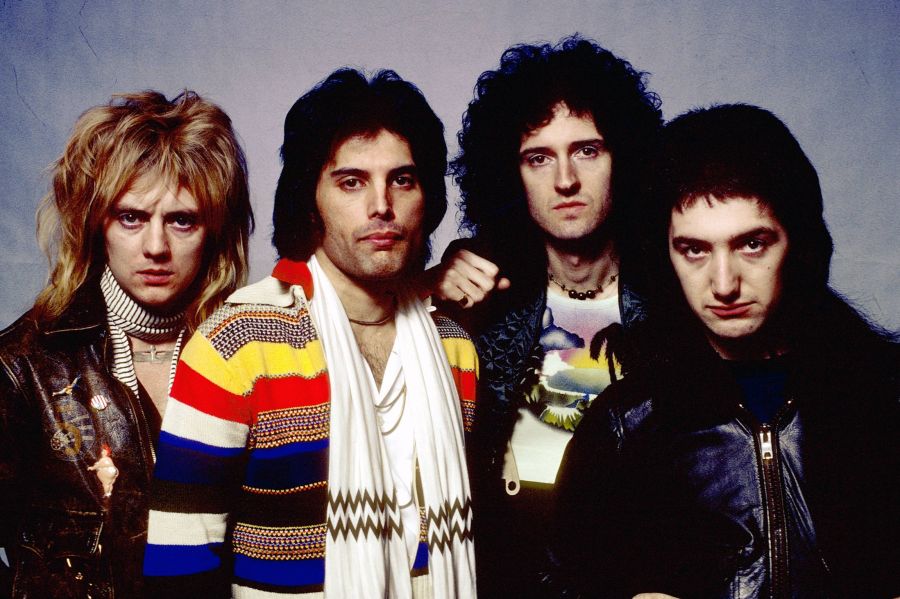
 Queen are a British rock band formed in 1970 by Freddie Mercury, Brian May, Roger Taylor and John Deacon. Their fifteen studio albums, live recordings and compilations span several styles and decades of international activity. Sheer Heart Attack (1974) and A Night at the Opera (1975) substantially expanded the group’s audience; the latter included “Bohemian Rhapsody”, which led the UK singles chart for nine weeks. Mercury died in 1991, and Deacon retired from public performance later in the decade. May and Taylor continued to participate in Queen-related performances, including collaborations with Paul Rodgers and, subsequently, Adam Lambert. Queen were inducted into the Rock and Roll Hall of Fame in 2001.
Early days (1968–1974)
In 1968, guitarist Brian May, a student at London’s Imperial College, and bassist Tim Staffell decided to form a band. May placed an advertisement on the college notice board for a “Mitch Mitchell/Ginger Baker type” drummer; Roger Taylor, a young dental student, auditioned and got the job. The group called themselves Smile. Smile signed to Mercury Records in 1970 and had their first session in a recording studio in Trident Studios that year.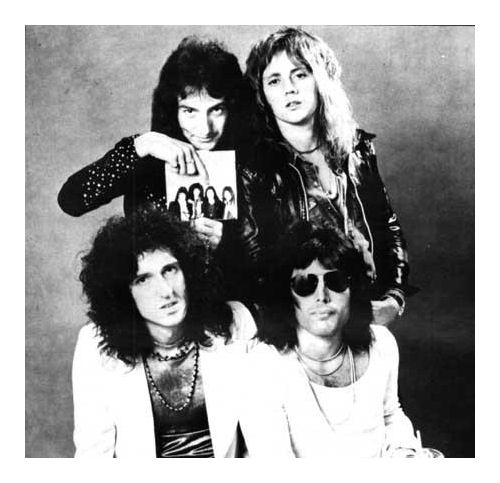 While attending Ealing Art College Tim Staffell became friends with Farrokh Bulsara, a fellow student who had assumed the English name of Freddie. Bulsara took an interest in Smile and became closely associated with the group. In late 1970, after Staffell left to join the band Humpy Bong, the remaining Smile members, encouraged by Freddie, changed their name to “Queen” and continued working together. When asked about the name, Freddie explained, “I thought up the name Queen. It’s just a name, but it’s very regal obviously, and it sounds splendid. It’s a strong name, very universal and immediate. It had a lot of visual potential and was open to all sorts of interpretations. I was certainly aware of gay connotations, but that was just one facet of it. “Several bassists performed with the group before its lineup became settled. It was not until February 1971 that they settled on John Deacon and began to rehearse for their first album. They recorded demos of “Liar”, “Keep Yourself Alive”, “The Night Comes Down” and “Jesus”, but did not immediately secure a record contract. It was also around this time Freddie changed his name to ‘Mercury’, inspired by the line “Mother Mercury, look what they’ve done to me,” in the song My Fairy King.
In 1973, after a series of delays, Queen released their eponymous debut album, an effort influenced by the heavy metal and progressive rock of the day. The album was received well by critics; Gordon Fletcher of Rolling Stone said “their debut album is superb”, and Chicago’s Daily Herald called it an “above average debut”. However, it drew little mainstream attention and the lead single “Keep Yourself Alive”, a Brian May composition, sold poorly.
The group’s second LP Queen II was released in 1974. The album reached number five on the British album charts and became the first Queen album to chart in the UK and the Freddie Mercury-written lead single “Seven Seas of Rhye”, reached number ten in the UK, giving the band their first hit. Its extended arrangements, fantasy imagery and instrumental passages distinguished it from the debut. The band toured as support for Mott the Hoople in the UK and US during this period, and they began to gain notice for their energetic and engaging stage shows. Allmusic has described the album as a favourite among the band’s hardcore fans, and it is the first of three Queen albums to feature in the book 1001 Albums You Must Hear Before You Die. However, like its predecessor, sales of Queen II in the US were low.
Breakthrough era (1974–1975)
Brian May was absent when the band started work on their third album, Sheer Heart Attack, released in 1974. The album reached number two in the United Kingdom, sold well throughout Europe, and went gold in the United States. It marked a significant advance in the band’s commercial reach. The album experimented with a variety of musical genres, including British music hall, heavy metal, ballads, ragtime and Caribbean. At this point Queen started to move away from the progressive tendencies of their first two releases into a more radio-friendly, song-oriented style. Sheer Heart Attack introduced new sound and melody patterns that would be refined on their next album A Night at the Opera.
The single “Killer Queen” reached number two in the British charts, and became their first US hit, reaching number 12 on the Billboard Hot 100. It combines camp, vaudeville, British music hall with May’s guitar virtuosity. The album’s second single, “Now I’m Here”, a more traditional hard rock composition, was a number eleven hit in Britain. Retrospective appraisals have included the album in several published rankings: In 2006, Classic Rock ranked it number 28 in “The 100 Greatest British Rock Albums Ever”, and in 2007, Mojo ranked it #88 in “The 100 Records That Changed the World.” It is also the second of three Queen albums to feature in the book 1001 Albums You Must Hear Before You Die.
In 1975, the band left for a world tour with each member in Zandra Rhodes-created costumes and accompanied with banks of lights and effects. They toured the US as headliners, and played in Canada for the first time. 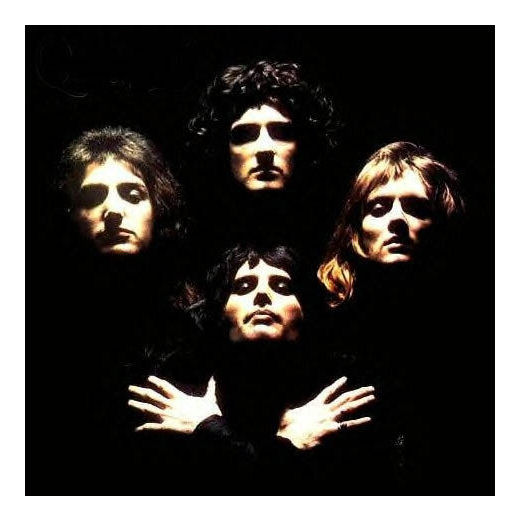 While the band toured Japan in April, the band’s manager Jim Beach successfully negotiated the band out of their Trident contract. Of the options they considered was an offer from Led Zeppelin’s manager, Peter Grant. Grant wanted them to sign with Led Zeppelin’s own production company, Swan Song Records. The band found the contract unacceptable and instead, contacted Elton John’s manager, John Reid, who accepted the position.
In late 1975 Queen recorded and released A Night at the Opera. Named after the Marx Brothers film, it was noted for the scale and cost of its production. Like its predecessor, the album features diverse musical styles and experimentation with stereo sound. In “The Prophet’s Song”, an eight-minute epic, the middle section is a canon, with simple phrases layered to create a full-choral sound. The album achieved substantial sales in Britain and triple-platinum certification in the United States. Public polls and retrospective lists have also ranked the album highly: in a worldwide Guinness poll, it was voted the 19th greatest all time, while an ABC poll saw the Australian public vote it the 28th greatest of all time. A Night at the Opera has frequently appeared in “greatest albums” lists reflecting the opinions of critics. Among other accolades, it was ranked number 16 in Q Magazine’s “The 50 Best British Albums Ever” in 2004, and number 11 in Rolling Stone’s “The 100 Greatest Albums of All Time” as featured in their Mexican edition in 2004. It was also featured as one of Rolling Stone’s “500 greatest albums of all time” in 2003. A Night at the Opera is the third and final Queen album to be featured in the book 1001 Albums You Must Hear Before You Die.
The album also featured the hit single “Bohemian Rhapsody” which was number one in the UK for nine weeks, and is Britain’s third-best-selling single of all time; beaten only by Band Aid’s Do They Know it’s Christmas? and Elton John’s Candle in the Wind 1997 – making it the best selling commercial single in the UK. It also reached number nine in the United States (a 1992 re-release reached number two). The single returned to number one in the UK following its later reissue. “Bohemian Rhapsody” has appeared prominently in retrospective polls. The promotional video created for the single became an influential example of the form. Although other bands, including The Beatles, had made short promotional films or videos of songs prior to this, generally those were specifically made to be aired on specific television shows). The video circulated widely as promotional material for the single. The second single from the album, “You’re My Best Friend”, the second song composed by John Deacon, and his first single, peaked at sixteen in the United States and went on to become a worldwide Top Ten hit.
Continued success (1976–1979)
By 1976, Queen were back in the studio recording A Day at the Races, which may be seen by some as a companion album to A Night at the Opera. It again borrowed the name of a Marx Brothers’ movie, and its cover was similar to that of A Night at the Opera, a variation on the same Queen Crest. Musically, the album was by both fans’ and critics’ standards a strong effort, and reached number one on the British charts. The major hit on the album was “Somebody to Love”, a gospel-inspired song in which Mercury, May, and Taylor multi-tracked their voices to make a 100-voice gospel choir. The song went to number two in the United Kingdom, and number thirteen on the US singles chart. The album also featured one of the band’s heaviest songs, Brian May’s “Tie Your Mother Down”, which became a staple of their live shows.
In 1976, Queen gave a free concert in London’s Hyde Park that became a landmark in their live history. It set an attendance record, with 150,000 people confirmed in the audience.
News of the World was released a year later. It contained many songs tailor-made for live performance, including “We Will Rock You” and the rock ballad “We Are the Champions”, both of which reached number four in the United States and became enduring international sports anthems.
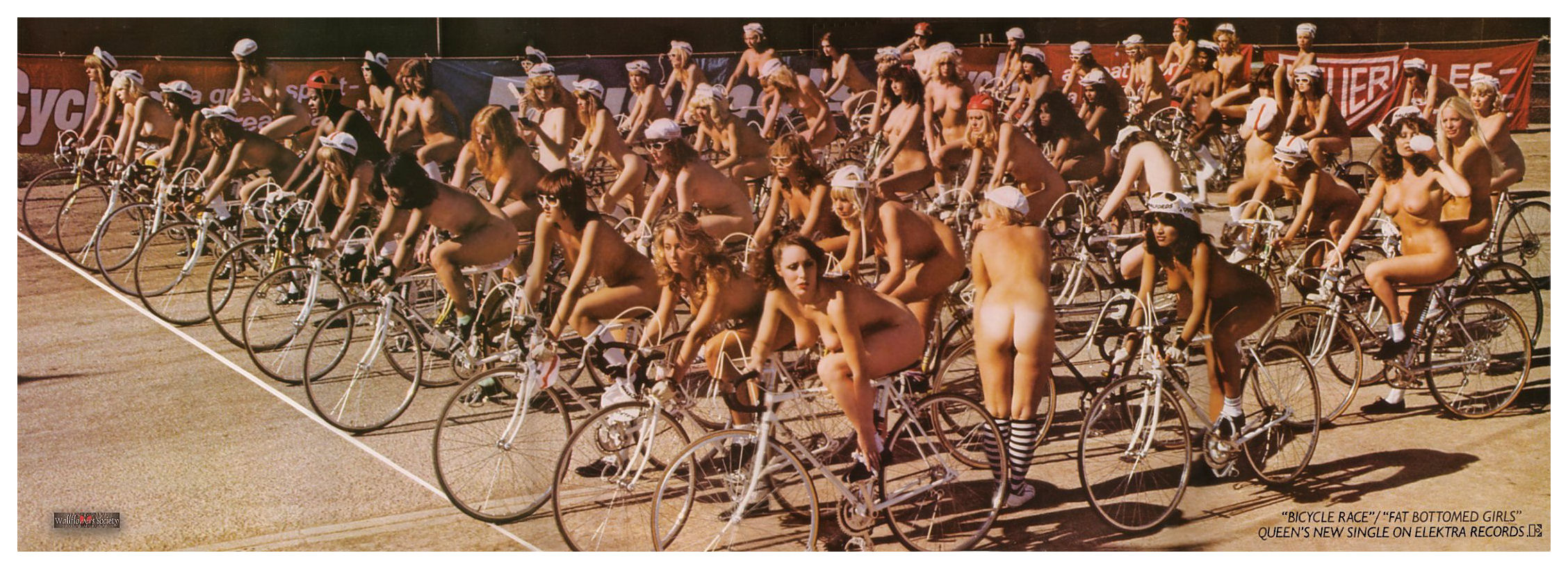 In 1978 the band released Jazz, which included the hit single double a side single “Fat Bottomed Girls” and “Bicycle Race”. This album was “the target of a bizarre marketing campaign, in which sixty-five naked women were perched atop bicycles rented from Halford’s Cycles and sent racing around Wimbledon Stadium.” The word “jazz” was not used in a strict sense, and the album was noted by critics for its collection of different styles, jazz not being one of them. Rolling Stone Magazine criticised it for being “dull”, saying “Queen hasn’t the imagination to play jazz – Queen hasn’t the imagination, for that matter, to play rock & roll.” Notable tracks from the album include “Dead on Time”, “Don’t Stop Me Now”, “Let Me Entertain You”, and “Mustapha”, in which Arabesque music is combined with heavy rock guitar.
The band’s first live album, Live Killers, was released in 1979; it went platinum twice in the United States. They also released “Crazy Little Thing Called Love”, a rockabilly-influenced single. The song made the top 10 in many countries, and was the band’s first number one single in the United States.
New sound and synthesisers (1980–1984)
Queen began the 1980s with The Game. It featured the singles “Crazy Little Thing Called Love” and “Another One Bites the Dust”, both of which reached number one in the United States. The album stayed number one for four weeks in the United States, and sold over four million copies. It was also the only album to ever top the Billboard rock, dance, and R&B charts simultaneously and marked the first appearance of a synthesiser on a Queen album. Heretofore, their albums featured a distinctive “No Synthesisers!” sleeve note. The note is widely assumed to reflect an anti-synth, pro-“hard”-rock stance by the band, but was later revealed by producer Roy Thomas Baker to be an attempt to clarify that those albums’ multi-layered solos were created with guitars, not synths, as record company executives kept assuming at the time.
1980 also saw the release of the soundtrack Queen had recorded for Flash Gordon.
In 1981, Queen undertook large stadium concerts in Latin America. Queen played to a total audience of 479,000 people on their South American tour, including five shows in Argentina and two in Brazil where they played to an audience of more than 130,000 people in the first night and more than 120,000 people the following night at São Paulo (Morumbi Stadium). In October of the same year, Queen performed for more than 150,000 fans on October 9 at Monterrey (Estadio Universitario) and 17 and 18 at Puebla (Estadio Zaragoza), Mexico.
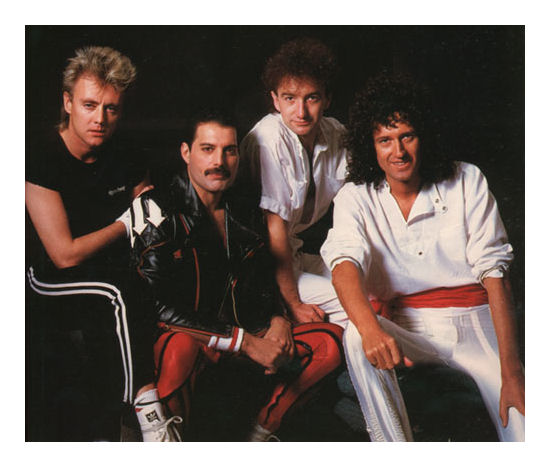 Queen worked with David Bowie on the single “Under Pressure”. The first-time collaboration with another artist was spontaneous, as Bowie happened to drop by the studio while Queen were recording. The band were immediately pleased with the results, but Bowie did not play the song live for several years. The song reached number one in the United Kingdom. The bass line was later used for Vanilla Ice’s 1990 hit “Ice Ice Baby”.
Later that same year, Queen released their first compilation album, entitled Greatest Hits, which showcased the group’s highlights from 1974–1981. The compilation achieved sustained commercial success in the United Kingdom. Taylor became the first member of the band to release his own solo album in 1981, entitled Fun In Space.
In 1982 the band released the funk album Hot Space. Following the Hot Space tour, Queen did not undertake another North American tour with Mercury, although they appeared on Saturday Night Live. Queen left Elektra Records, their label in the United States, Canada, Japan, Australia, and New Zealand, and signed onto EMI/Capitol Records.
After working steadily for over ten years, Queen decided that they would not perform any live shows in 1983. During this time, they did however record a new album, and several members of the band explored side projects and solo work. May released a mini-album entitled Star Fleet Project, on which he collaborated with Eddie Van Halen.
In 1984, Queen released the album The Works, which included the successful singles “Radio Ga Ga” and “I Want to Break Free”. Despite these hit singles, the album failed to do well in the United States. “Radio Ga Ga” was the band’s last original American Top Forty hit until 1989’s “I Want It All”.
The subsequent Works tour introduced keyboardist Spike Edney to Queen’s touring ensemble. The tour featured several dates in Bophuthatswana, South Africa, at the arena at Sun City. Upon returning to England, they were the subject of outrage, having played there during the height of apartheid and in violation of worldwide divestment efforts. The band responded to the critics by stating that they were playing music for fans in that country, and they also stressed that the concerts were played before integrated audiences.
Live Aid and later years (1985–1990)
In January 1985, Queen headlined two nights of the inaugural Rock in Rio festival. They were the main act on the 11 and 18 January line-ups. On each night, they played in front of over 300,000 people. A selection of highlights of both performances was released on VHS on May with the title Queen Live in Rio.
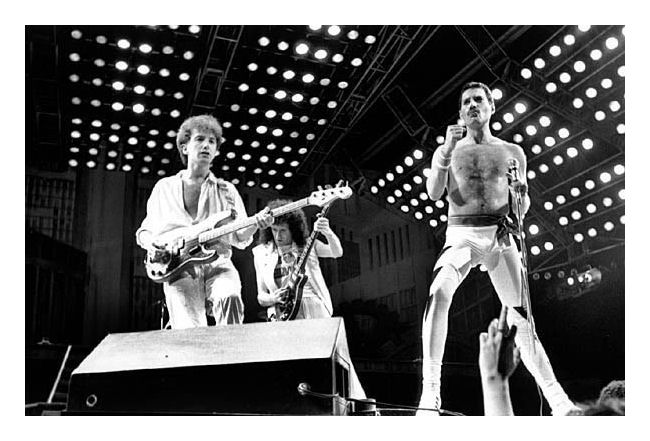
At Live Aid on 13 July 1985, Queen gave a performance that has been widely discussed in accounts of the event. The band, now revitalised by the response to Live Aid and the ensuing increase in record sales, ended 1985 by releasing the single “One Vision”. The song was used in the film Iron Eagle. Also, a limited-edition boxed set containing all Queen albums to date was released under the title of “The Complete Works”. The package included previously unreleased material, most notably Queen’s non-album single of Christmas 1984, titled Thank God it’s Christmas.
In early 1986, Queen recorded the album A Kind of Magic, containing several reworkings of songs written for the Russell Mulcahy film Highlander. The album was very successful, producing a string of hits, including the title track, “A Kind of Magic.” Also charting from the album were “Friends Will Be Friends”, “Who Wants to Live Forever?”, and the de facto theme from Highlander, “Princes of the Universe”. 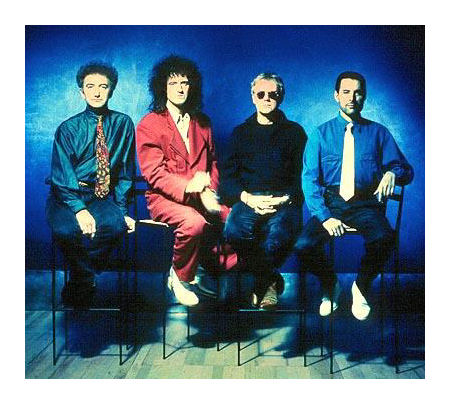
Later that year, Queen toured in support of A Kind of Magic, again with Spike Edney on keyboards. The Magic Tour’s highlight was at Wembley Stadium in London and resulted in the live double album, Queen Live At Wembley Stadium, released on CD and as a live concert film. They could not book Wembley for a third night, but they did play at Knebworth Park. The show sold out within two hours and over 120,000 fans packed the park for what proved to be Queen’s final live performance with Mercury. More than 1 million people saw Queen on the tour – 400,000 in the United Kingdom alone, a record at the time.
After working on various solo projects during 1988 (including Mercury’s collaboration with Montserrat Caballé, Barcelona) the band released The Miracle in 1989. The album continued the direction of A Kind of Magic, using a pop-rock sound mixed with a few heavy numbers. It spawned the European hits “I Want It All”, “Breakthru”, “The Invisible Man”, “Scandal”, and “The Miracle”.
The Miracle also began a change in direction of Queen’s songwriting philosophy. Since the band’s beginning, nearly all songs had been written by and credited to a single member, with other members adding minimally. On The Miracle, the band adopted collective songwriting credits, reflecting a more collaborative working method.
Mercury’s death and beyond (1991–2003)
During the late 1980s, public speculation about Mercury’s health accompanied the recording of The Miracle and Innuendo. The latter appeared in February 1991, followed by Greatest Hits II in October. Mercury publicly confirmed his AIDS diagnosis on 23 November 1991 and died the following day from bronchopneumonia associated with the illness. His funeral was private and followed his family’s Zoroastrian tradition. After his death, “Bohemian Rhapsody” was reissued with “These Are the Days of Our Lives” and returned to number one in the United Kingdom; proceeds supported the Terrence Higgins Trust. Its use in the 1992 film Wayne’s World also renewed attention to the song in the United States.
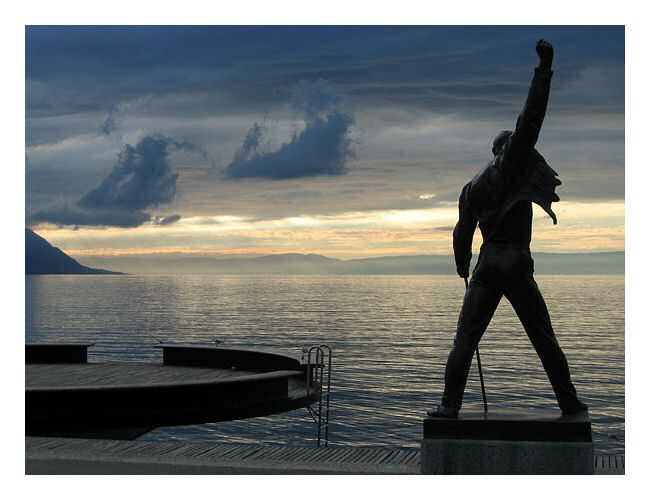 On 20 April 1992, the surviving members of Queen joined numerous guest performers at Wembley Stadium for the Freddie Mercury Tribute Concert, an event that raised funds and awareness for AIDS-related causes. The band’s final studio album with Mercury, Made in Heaven, followed in 1995 and incorporated recordings he had completed before his death together with later work by the other members. In 1997, Queen recorded “No-One but You (Only the Good Die Young)”, the last new group recording with John Deacon; it appeared on the Queen Rocks compilation. May and Taylor subsequently performed with guest vocalists and released related projects under the Queen + designation. Greatest Hits III appeared in 1999, and the musicians contributed to Nelson Mandela’s 46664 AIDS campaign in 2003.
Musical style
Queen’s recordings draw on progressive rock, hard rock, glam rock, pop, dance music and other traditions. Individual songs also incorporate elements of country, ragtime, opera, gospel, vaudeville and folk. The group’s arrangements frequently use layered guitars and multitracked vocal harmonies, particularly the combined voices of Mercury, May and Taylor. Producer Roy Thomas Baker and engineer Mike Stone contributed to the development of this studio sound. Repeated overdubs could create a choral effect, while songs such as “We Will Rock You” and “We Are the Champions” emphasised audience participation in live performance.
From Wikipedia article


You must be logged in to post a comment.